Anant Mankar
Adaptive Kirigami Kitchen Garden
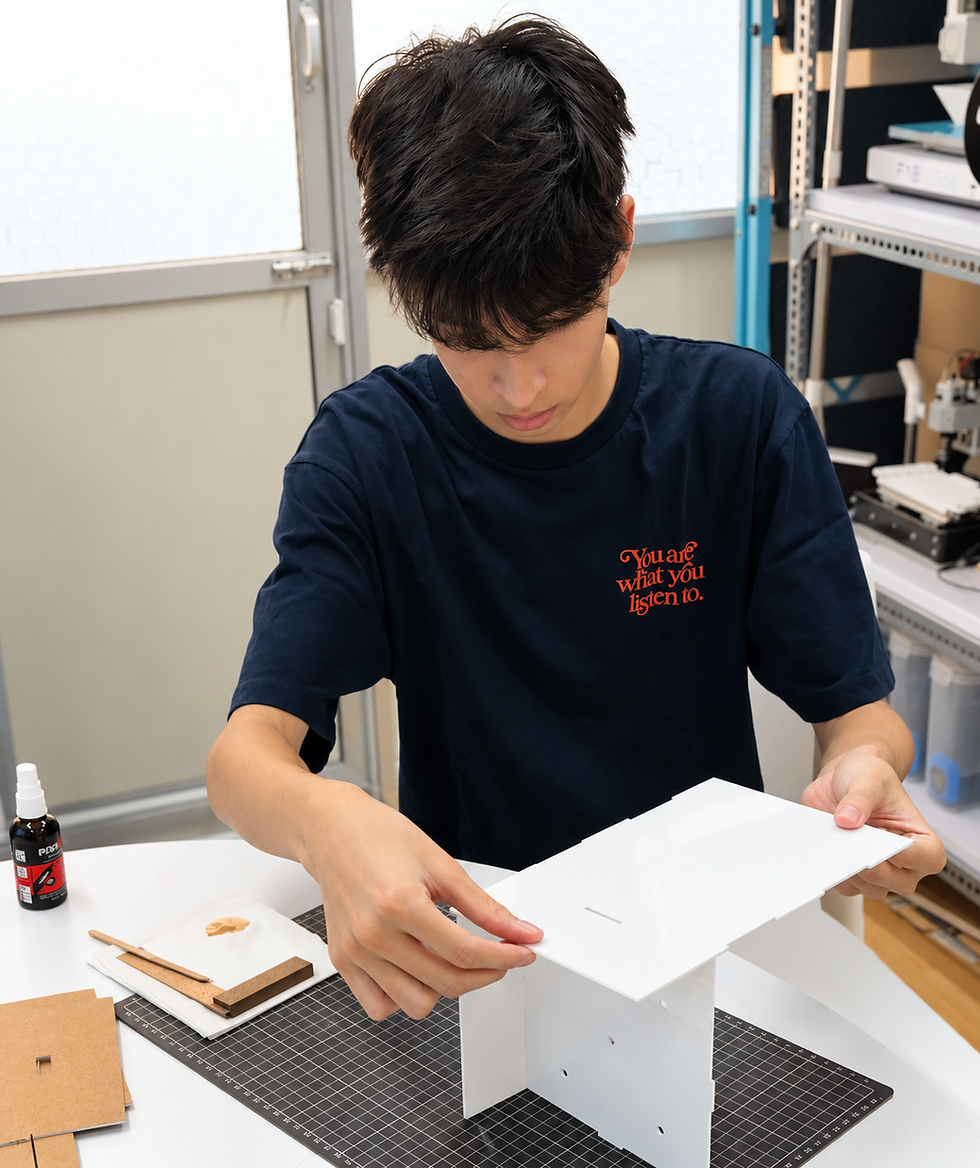
This project explores how kirigami-inspired structures can be used to optimize micro-environments for home kitchen gardens. The student will design a 1 ft × 1 ft modular planter box whose internal architecture changes based on the needs of the plant being grown. Using kirigami cuts, folds, and pop-up mechanisms, the planter integrates interchangeable louvers and panels that control sunlight exposure, airflow, and moisture retention.
Each kirigami insert is engineered for a specific environmental requirement:
High-sunlight plants get reflective or angled kirigami louvers that channel maximum light.
Shade-loving or moisture-hungry plants get folded baffled structures that reduce evaporation and diffuse light.
Medium-water plants get hybrid patterns balancing airflow and humidity.
The final output is a customizable, flat-pack garden box where users can swap kirigami modules depending on the seed they choose. This transforms a simple cardboard planter into a dynamic micro-climate system—merging 3D design, biomimetic engineering, and sustainable urban gardening.


